Editorial
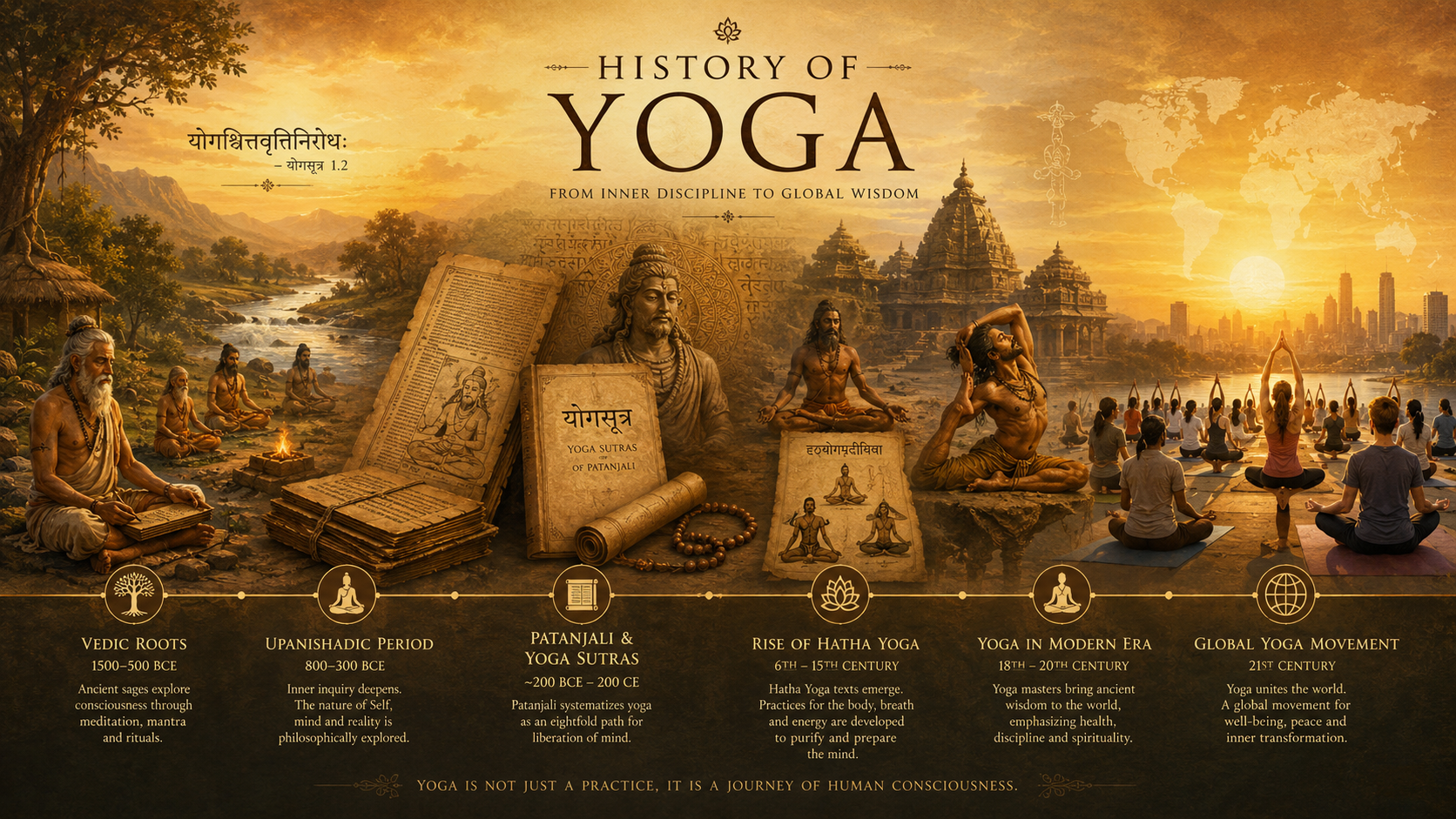
The Unbroken Lineage: A Journey Through Yoga’s History
An original exploration of yoga’s evolution, from its mythic beginnings with the Adiyogi and the Great Epics to the rigorous systemization of the Hatha masters.

Ancient verse
Yoga Sutra 1.2
योगश्चित्तवृत्तिनिरोधः।
yogaś citta-vṛtti-nirodhaḥ
Meaning in English
Yoga is the technology of stilling the erratic movements of the consciousness.
Section
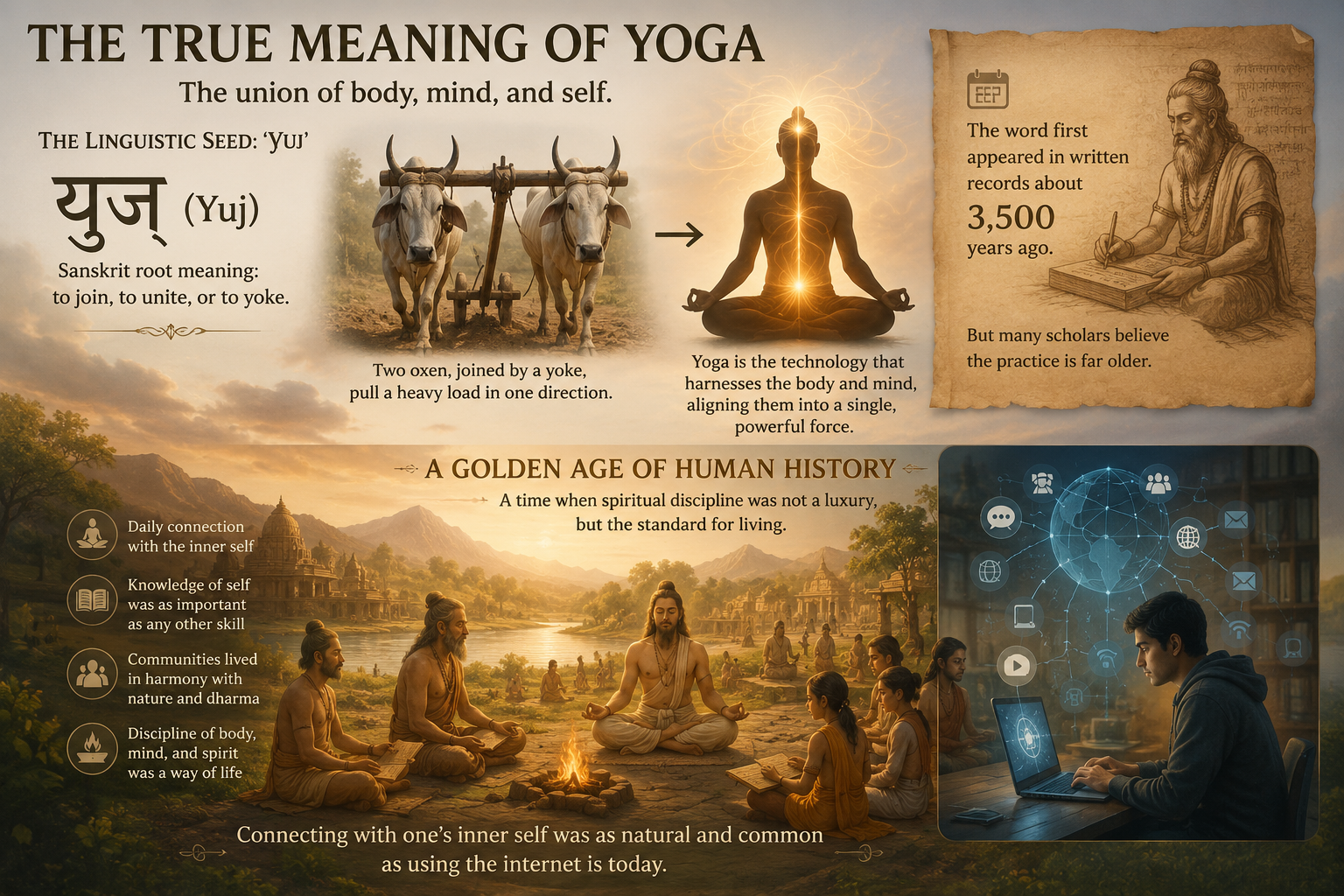
The Root of Union: What is Yuj?

Sage of Action:
We often think ancient people were primitive, but in terms of internal technology, they were far more advanced than us. They lived in a world where the norm was awareness, not distraction.
Section
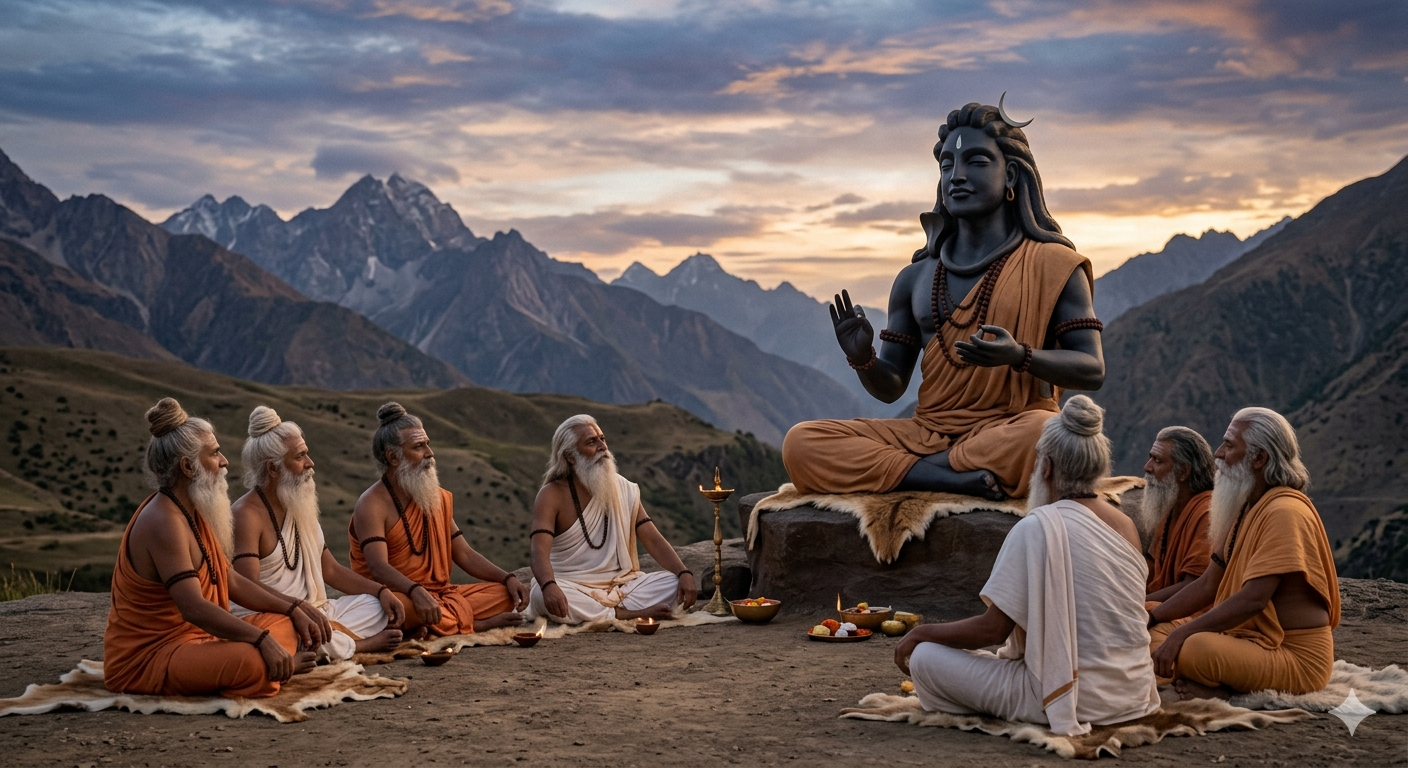
The Primeval Transmission

Sage of Action:
Yoga was not limited to religion; it was preserved as a method of inner transformation: a technology for the human software. It is the original manual for the soul.
Section
The Four Pillars: The Wisdom of the Vedas
Sage of Action:
This is the most profound metaphor for the practice: the human body is the chariot, and Yoga is the skill of harnessing your internal energy to drive with purpose, rather than being pulled by the horses of desire.
Section
The Inward Revolution: The Upanishads
Section
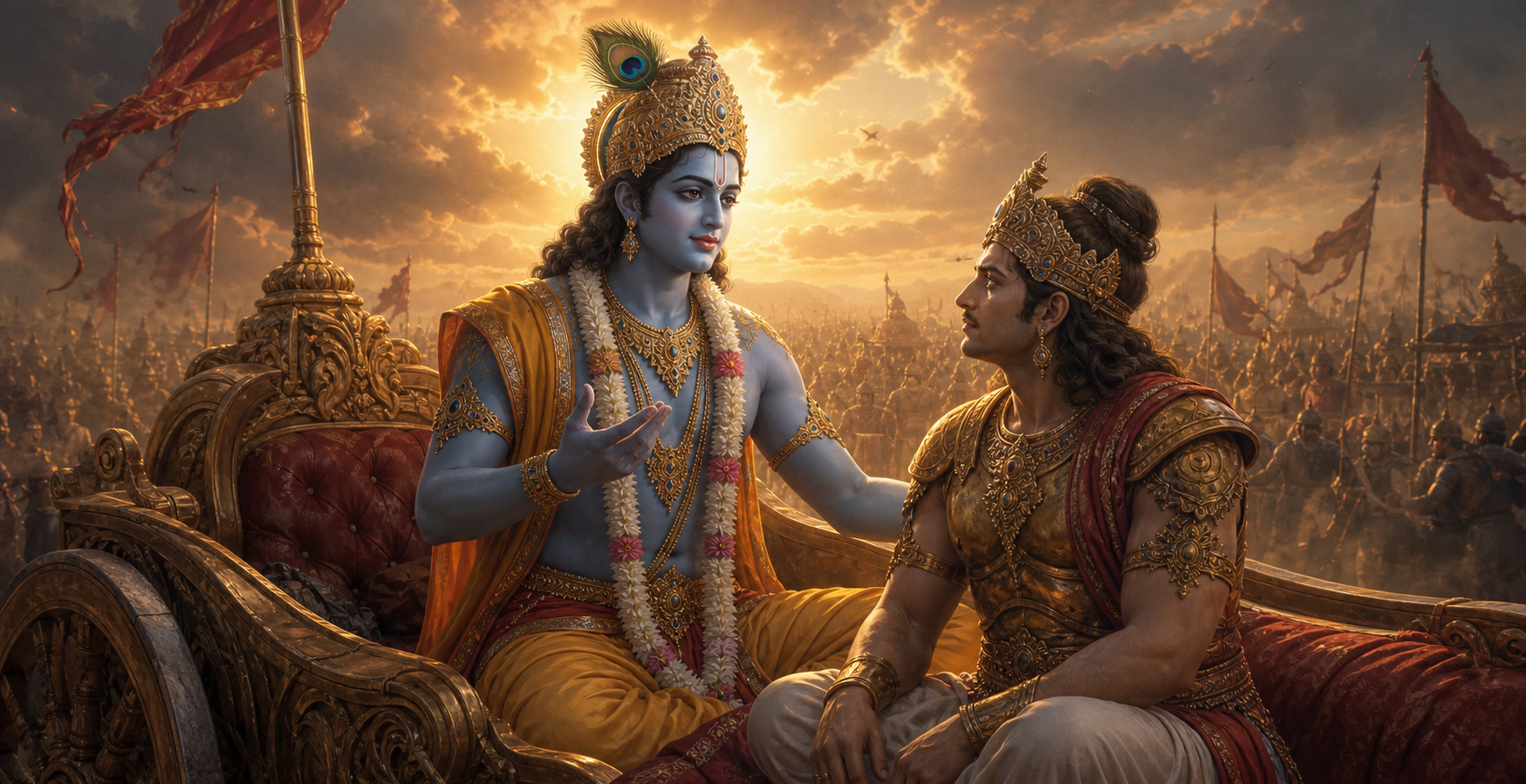
The Great Epics: Yoga in Action

Section
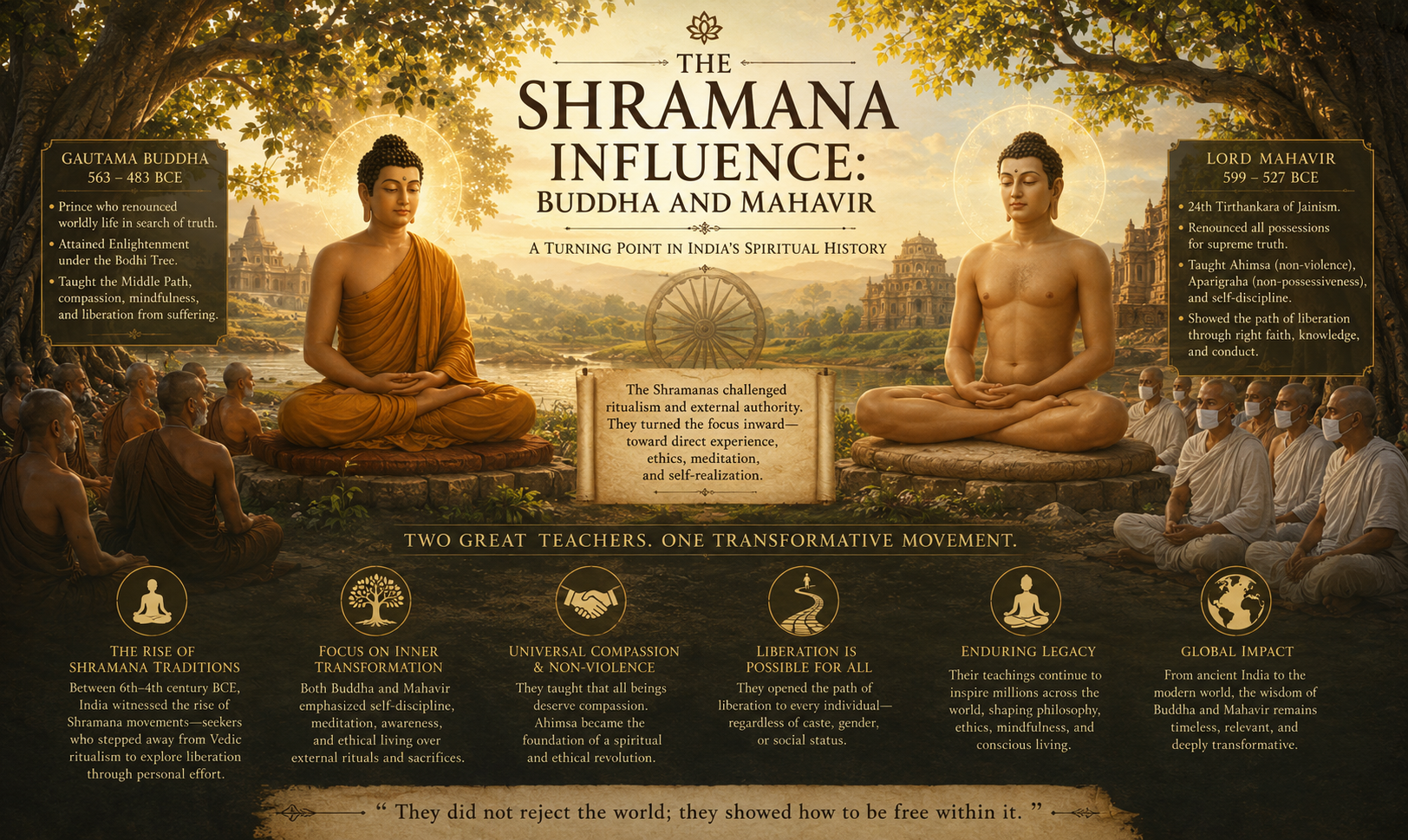
The Shramana Influence: Buddha and Mahavir

Sage of Action:
The silence of the Buddha and the austerity of Mahavir provided a new depth to yoga. They shifted the focus of practice from outer rituals to inner awareness and personal liberation.
Section
Patanjali: The Scientist of the Mind

Section
Hatha Logic: Mastery Through the Flesh
Section
The Modern Era: From Mysore to the World
Sage of Action:
Today, we have 84,000 asanas but very little silence. We must return to the 'Adiyogi spirit.' Less focus on how the pose looks, more on how the mind feels. Yoga is not about self-improvement; it is about self-realization.
Section
The Architecture of Inwardness
The Silent Roots
The era of the Indus-Saraswati valley. Seals found in ancient ruins are often interpreted as early evidence of seated meditative culture.
The Vedic Foundations
The four Vedas introduce imagery of yoking and alignment. Yoga is the harness for the mind.
The Epics & The Gita
Mahabharata and Bhagavad Gita present yoga as a skill in action on the battlefield of life.
The Upanishadic Awakening
Discovery of the Witness and the unity of Atman and Brahman.
The Way of the Shramanas
Buddha and Mahavir emphasize ethics, detachment, and deep mental observation.
The Classical Era
Patanjali organizes the Eight Limbs of Yoga in the Yoga Sutras.
The Hatha Revolution
Rise of Hatha Yoga texts. The body as an energetic bridge to meditation.
The Global Bridge
Yoga goes global via Swami Vivekananda and modern masters like Krishnamacharya.
Section
Previous Articles in this Series
References used for the editorial direction